In Barcelona, we have been helped by Vania, when needed, for many years. Vania had a son very young, and the child has been growing up in Cochabamba, Bolivia with Vania´s mother. Through a network of other migrants from Bolivia, some years ago, Vania got an opportunity to work in Barcelona. And over the years, Mona has helped and supported her, partly by giving her work, but also emotionally when things have been difficult. Partly based on Mona´s encouragement, Vania has now completed her high school, has trained to qualify as a dental hygienist and now works for Marcela, Mona’s sister, who runs a dental clinic in Barcelona. And before we left Spain in the fall of 2022, Mona promised her that we would visit her mother and her son when we traveled through Bolivia.
Therefore, when we approached Cochabamba, we called her mother, Valentina, and her son Gerard (named after a famous former football player). Gerard is now 12 years old. After some discussion, we agreed to meet at a restaurant-cafe on the outskirts of the city.
After various detours due to numerous road blockades, we finally found our way and parked the car nearby. After a long wait, Valentina and Gerard finally arrived. They had been required to take three different taxis to get to the meeting place, because several entrances to Cochabamba were blocked by indigenous people protesting recent increases in the price of water. In addition, Valentina and Gerard live a good distance from where we met them.
We had a very pleasant lunch, and we were then invited home to them to rest a little before we continued our travel. It later turned out that we stayed with them for two nights.
The road to their home, however, was interesting. Due to lack of space in the Toyota (we only have the 2 front seats), we agreed to follow them as they took a taxi. And so began a long drive, mostly on narrow dirt roads, to find a way to reach their home despite the many protest-blocked roads. We drove in a group of about 6 vehicles (and a good number of motorcycles) and at one point had to pay extra to get help/permission to cross a river. We were warned that heavy vehicles could have problems in the sand on the steep slope on the other side of the river. However, we have many times been in similar situations and I know that the land cruiser is almost unstoppable. While I waited for the taxi with Valentina and Gerard to be pushed up the slope by the river crossing team, I put the Toyota in low gear, crossed the almost dry river and then climbed up the other side without any drama whatsoever.
But it was truly very interesting to see how the local people largely self-organized and kept order – certainly I did see a little sum of money changing hands for this to go smoothly – but everyone respected the way it all worked out. And all without involvement of “state highway troopers”, police (in Europe for sure with riot gear and batons) or any other authority´s interference.
And then the expedition continued until we finally reached their house, which is in an area with relatively simple buildings on the outskirts of Cochabamba. The picture below is from the next morning when we went to visit a Christ statue that stands on a mountain in the middle of Cochabamba (note the smog that lies like a blanket over the city below).
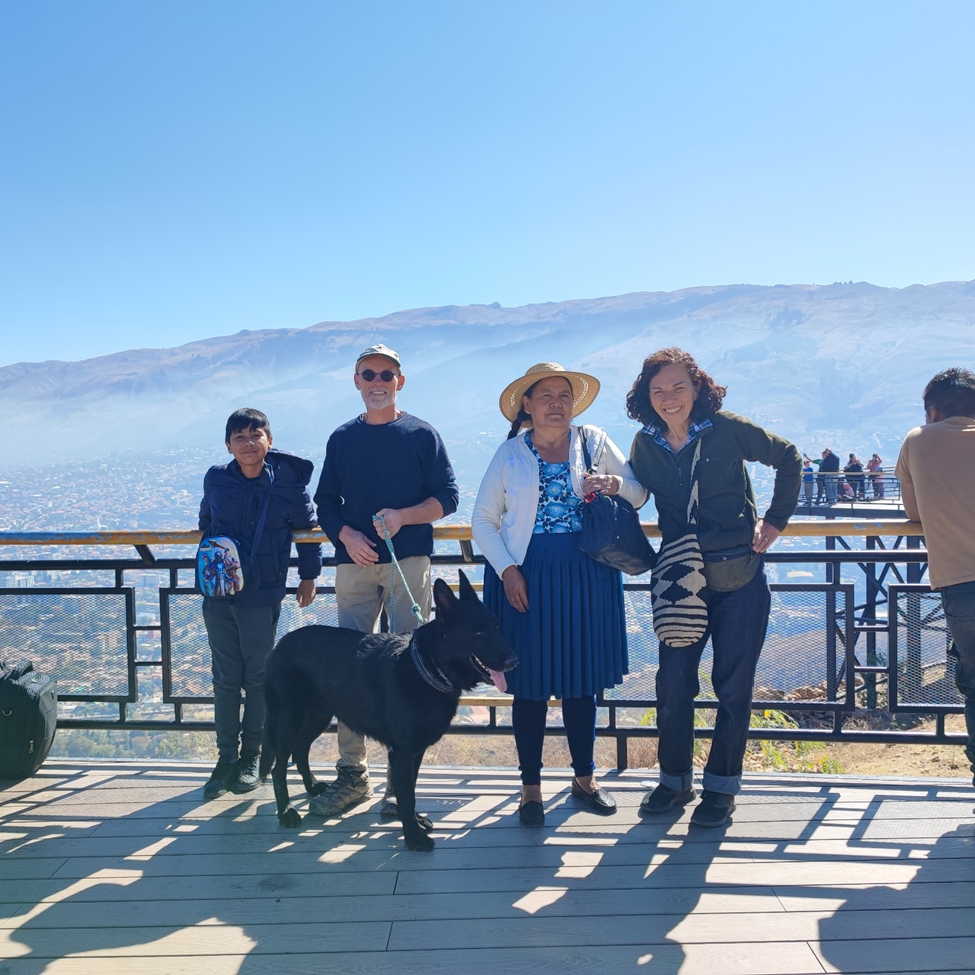
In Valentina’s house, she rents out 3 rooms, each with a small kitchen and shared access to one toilet with a small shower. A bit cramped, depending on what you’re used to. But cozy and not least interesting to get an insight into how the locals live with limited means (without hot water and with little personal space) and how they organize their lives. Valentina, Gerard, and the tenants speak Quechua to each other – a language used by the indigenous people of Bolivia. And, as you can see in the picture, Valentina also dresses like a native with her two long braids and a knee length skirt filled with fabric. The skirt is commonly worn by native women in Cochabamba and it´s called a pollera – reportedly a traditional garment worn by native Bolivian women for centuries. Curiously, even for Spanish speakers, it was also sometimes difficult to understand Valentina’s Spanish due her strong accent.
Vania, in Barcelona, has now applied for a family reunification visa so that Gerard can come to Barcelona and live with her and go to school here. The plan is for her mother, Valentina, to come along on the trip to give her support in the transition phase (especially during the period Gerard gets used to a new lifestyle and school-system).
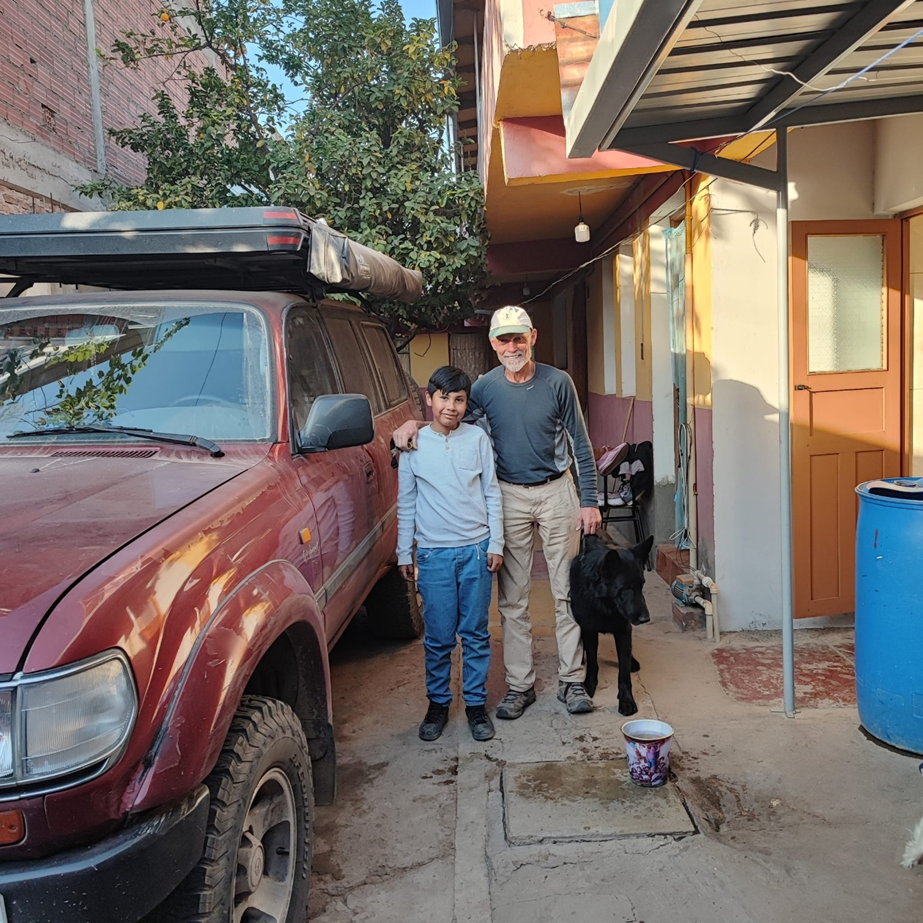
So, part of Mona’s (and my) task was to motivate both Grandmother Valentina and Gerard and respectfully and softly explain that Barcelona might represent a good opportunity, especially for Gerard.
This is a story which reflects the situation of so many immigrants from Peru, Bolivia, Ecuador, and Colombia in Europe.
And deep down, we must keep in mind that we humans are more alike than we think, regardless of color, history, faith, culture, or language. And that we neither choose our parents nor where we are born.












 elworldtrip
Posted on July 20, 2023 by elworldtrip
0