The first thing which struck us on our tour southbound, and not least in comparison to 10 years ago, is the amount of pollution clearly visible along the roads – often full of plastic bottles and other types of plastic-based packing material. Due to unplanned circumstances, we had to deviate from our planned inland route and visit Lima, and due to the long distances and to spare driving-time we eventually chose to follow the Pan American highway for quite a distance. And this became quite shocking – for thousands of kilometers both sides of the road twisting its way through the Peruvian desert was completely covered by plastic garbage.
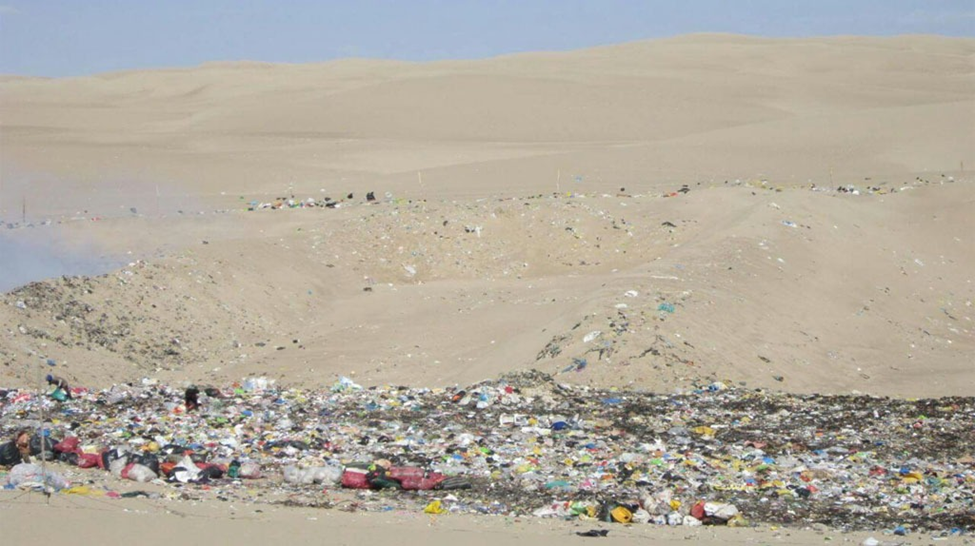
The Pan American highway is the main turnpike going from north to south and there are certainly many reasons for this sad situation, and one for sure is a lack of environmental education among passers through as well as locals, but also a lack of control and incentives to clean up from governing bodies.
A second observation is that the level of pollution seems to increase around and in urban areas. This might simply be due a higher population density – but what the exact causality is between population density and a faltering environmental consciousness reflected in plastic waste – is not clear, but certainly, a lack of education is one explanatory factor. For instance, in several countries, we observed youngsters eating fast food and drinking soft drinks and not thinking twice before throwing both the plastic packaging and the empty bottle at their feet, indicating that both plastic recycling and non-polluting still are relatively unknown concepts and not yet properly taught at school (at least not to the extent that it is internalized and reflected in behavior).
With reference to population density, it was interesting to note that the visible roadside pollution strongly dropped and became almost non-existent in the more thinly populated Paraguay and Uruguay. But surely this also has much to do with national and regional governance (in several countries road signs announce that pollution is against the law) and a more effective educational system.
On another dimension, we got an insight into the large extent of raw material extraction/mining in Peru when observing and passing convoys of large trucks trafficking up and down the Andes. The mineral- and raw material-based economy both in Peru and Bolivia is clearly visible when crossing the countries reflecting that mining contributes about 10% of GDP in Peru and 6% of GDP in Bolivia.











 elworldtrip
Posted on August 18, 2023 by elworldtrip
0