We spent the end of our tour in Varu (some kilometers south of Cartagena) and the last days in an Airbnb in the Crespo-barrio in Cartagena.
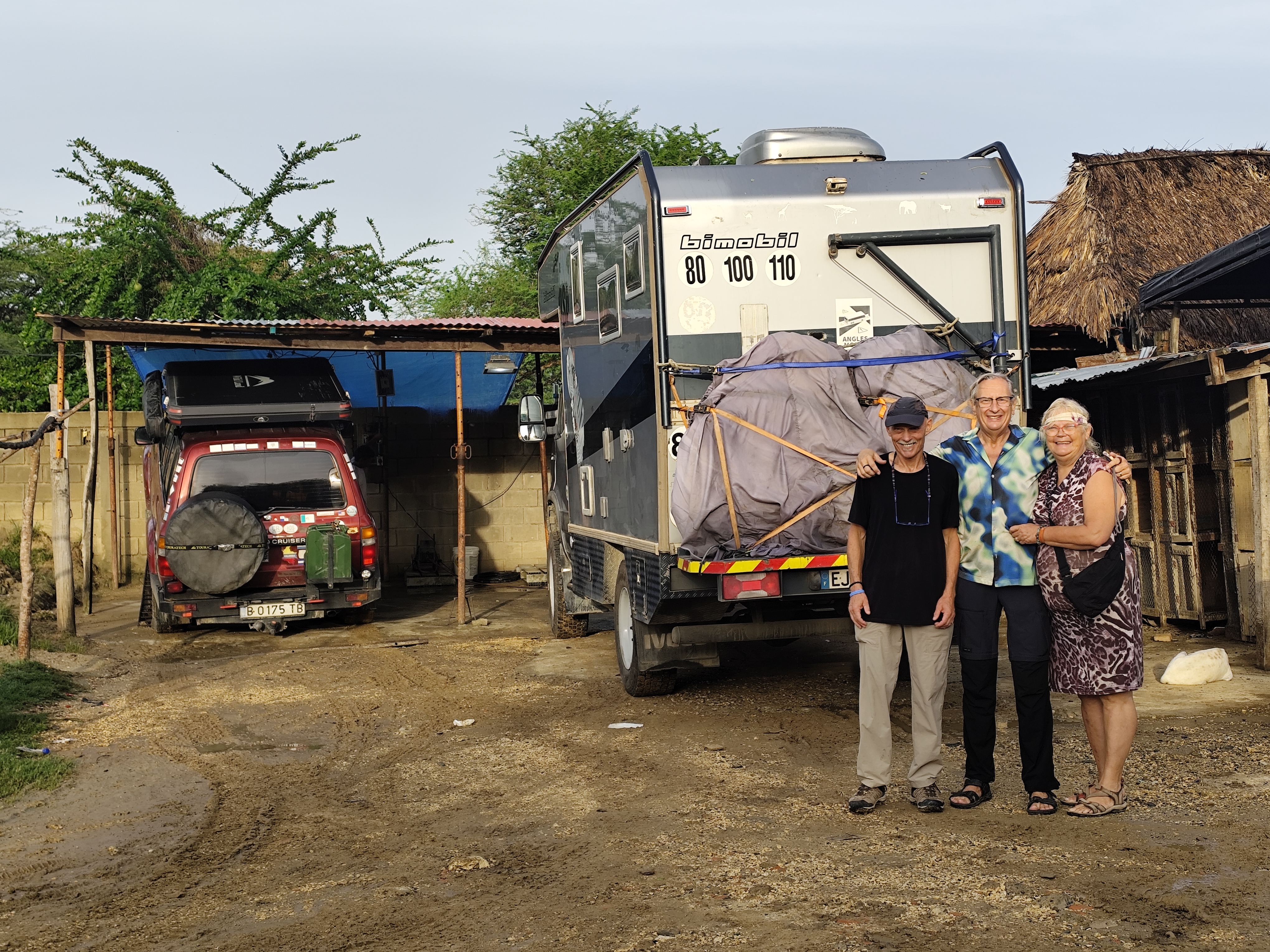
Before shipping the Land Cruiser from the vehicle-terminal in Baru, we stayed about 12 days at the beach camping “Isla Mar”. First, we were the only ones, but after a few days we got company by a French overlanding couple in their camper.
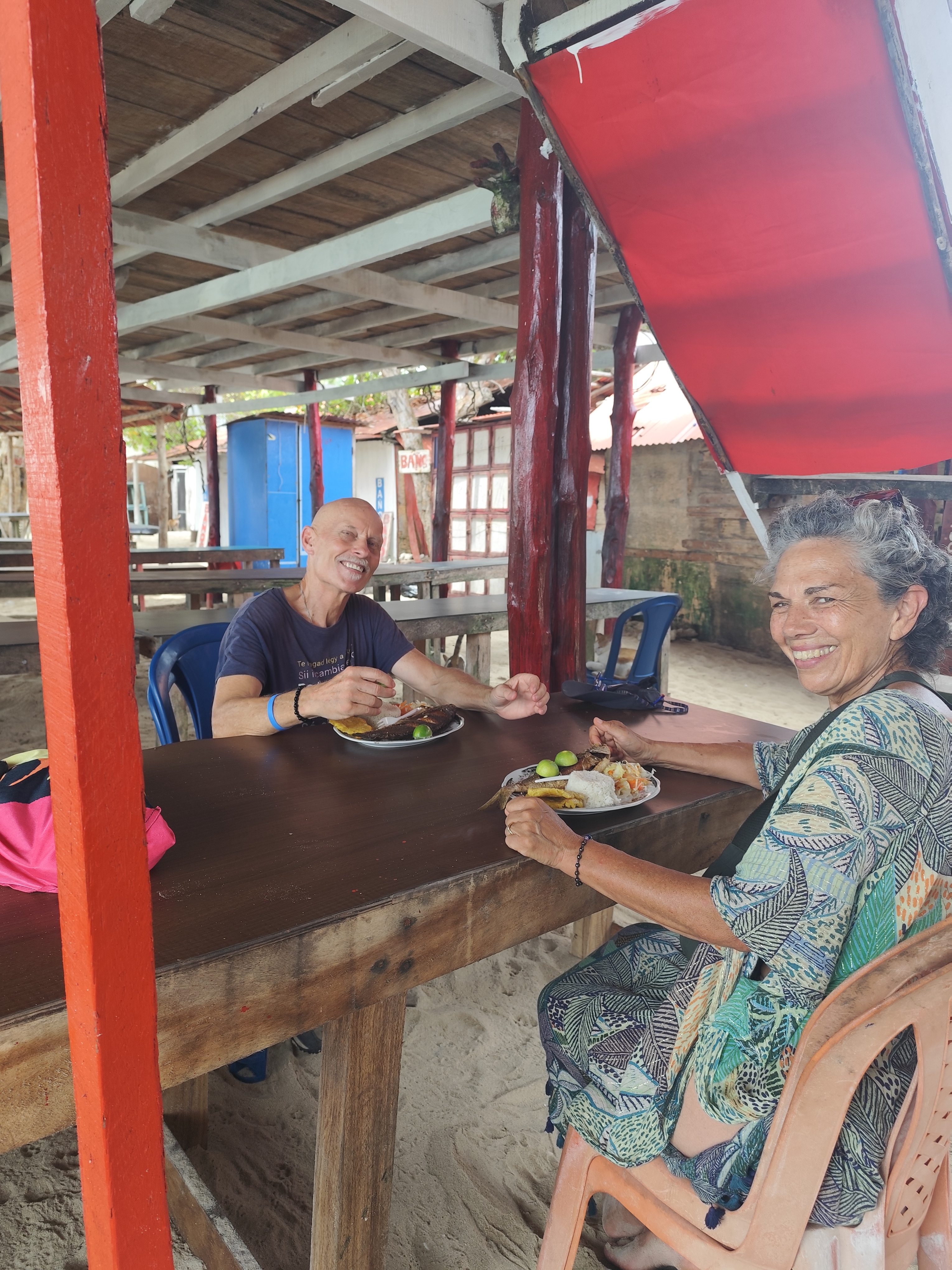
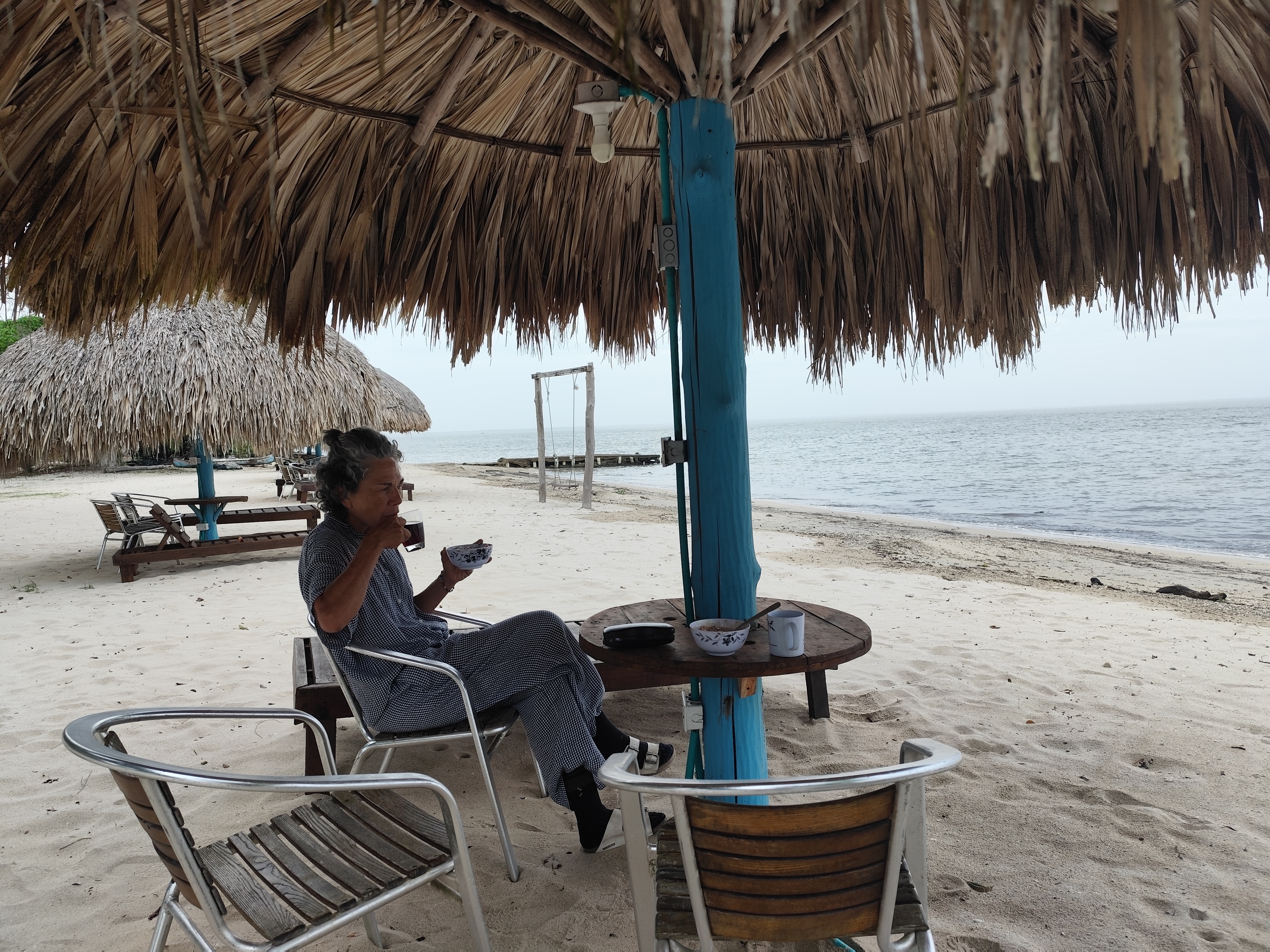
Interesting experience, but also a little test of survival skills in an almost constant “war” with local mosquitos and the very hot climate. In days with little wind, the nights in the tent soon became both long and humid. However, we also had bright spots, such as early morning breakfasts on the beach, swimming when the sea was calm and some home-made fish. Of course, swimming also helped us get a little exercise during days of otherwise little activity.
The relatively good internet/Wi-Fi conditions made it easy to work and closely monitore our car carrier Hoegh Oslo’s approach to Cartagena (the roro ship we contracted to ship the Land Cruiser from Cartagena to Antwerp). Actually, we ship the vehicle back to Europe on the same Norwegian-owned vessel which brought it to Cartagena three years ago.
Eventually, we got the message that the ship had arrived.
After a well-coordinated, with our French neighbors, cleaning of the vehicles at the nearby car-washer (required before entering the terminal), we drove to the agreed upon meeting place at the Terpel gas-station only a few kilometers from the terminal. Soon other overlanders arrived – nearly all much bigger vehicles than our tiny Land Cruiser. In this company, the Toyota suddenly became minuscule.
I commented on this with the only other small vehicle owner (an Italian from Venezia), driving a 2003 off-road prepared Land Rover with some 1.300.000 km on the odometer. Chatting as we looked at the other vehicles, we soon agreed that travelling in a 4×4 vehicle with a roof-top tent and carrying only the bare minimum of vital off-road equipment and personal belongings conceptually is a different form of travelling. Firstly, it is much less costly to drive a reasonably small vehicle compared to an eye-catching truck, but that’s only part of the story. You also have the fundamental benefit of getting anywhere you want without any restrictions such as height, width or weight. And, budget-wise, it’s also a different story as a fully equipped overlanding vehicle easily costs much more than Euro 150.000, – depending on age, size and sophistication.
I won’t get further into it, but it’s clear that the relatively new concept of “overlanding” which according to Google is “a recreational activity that combines driving into remote terrain with some form of camping”. However, this activity has evolved into something like driving around with a small house with all conveniences) which is starkly different from a relatively small and modest 4×4 vehicle. For sure, you draw much less attention using an off-road dirty and older well-used vehicle. And this fact also helps ease the interaction with locals. I think you simply are perceived as less pretentious and more “like us”. Being respectful, talking to locals (in a language they understand) and asking for permission to stay overnight are always appreciated. And asking for traveling tips and some water to brush your teeth also helps keep the conversation flowing. And for us, this is overlanding – talking to people across potential divides based on culture, language or social setting.
And we believe this interaction (the small talk) is more difficult if you travel in a shiny and super glorious tank-looking overlanding truck (with European or American registration).
To get the conversation going, being on the same wavelength is crucial – many times less is more.
The point I am trying to make is maybe simplest emphasized with reference to the following few photos from the day I drove to the transportation terminal in company with the other overlanders.












 elworldtrip
Posted on June 11, 2025 by oyvinkyvik
0