Traveling through South East Asia, we several times talked about visiting and, if possible, spending some days at a buddhist meditation-center. We kept on changing our plans, however, as we had to adjust all other activities in accordance with our two trips to China and the arrival of our car to Singapore.
Just after arriving to Vientiane, we visited a buddhist pagoda and asked a young monk, his name turned out to be monk Souly, if he possible could refer us to a place where we could learn more about meditation. We were lucky, not only was the monk a keen student of English making it easy to talk to him, but he was also all smiles and open to our request. He promised to ask around and agreed to meet us at his pagoda the next day. The following day, he told us that he had contacted the abbot at the “Forest Temple” at Wat Pa Na Khoun Noi, the National Therawadda Buddhist Moral & Vipassana Kammathanna Training School in Lao. We were told they were open to let us, westerners, learn about meditation. We could not believe how lucky we had been and there was more to come. Next morning, we were picked up by monk Souly and a driver and driven the approximately 20 km to the Forest Temple.
Upon arrival, we were shown around and given a place to sleep, issued white clothing to look respectful and to distinguish ourselves from the novices and monks (who all wore orange robes). Thereafter, we were introduced to the basic rules of conduct at the temple and encouraged to follow the procedures of “level 8”. This meant, amongst other, morning prayers (chanting) starting at 0400 a.m., making yourself available for offering at 0600 a.m. (we were issued a bowl and took part in the monks´ “begging” round each morning and as a special exception to the rule, even the girls were allowed to take part the last 3 mornings). With what we had collected (mainly rice and a few cookies), breakfast was served at 0700 a.m..
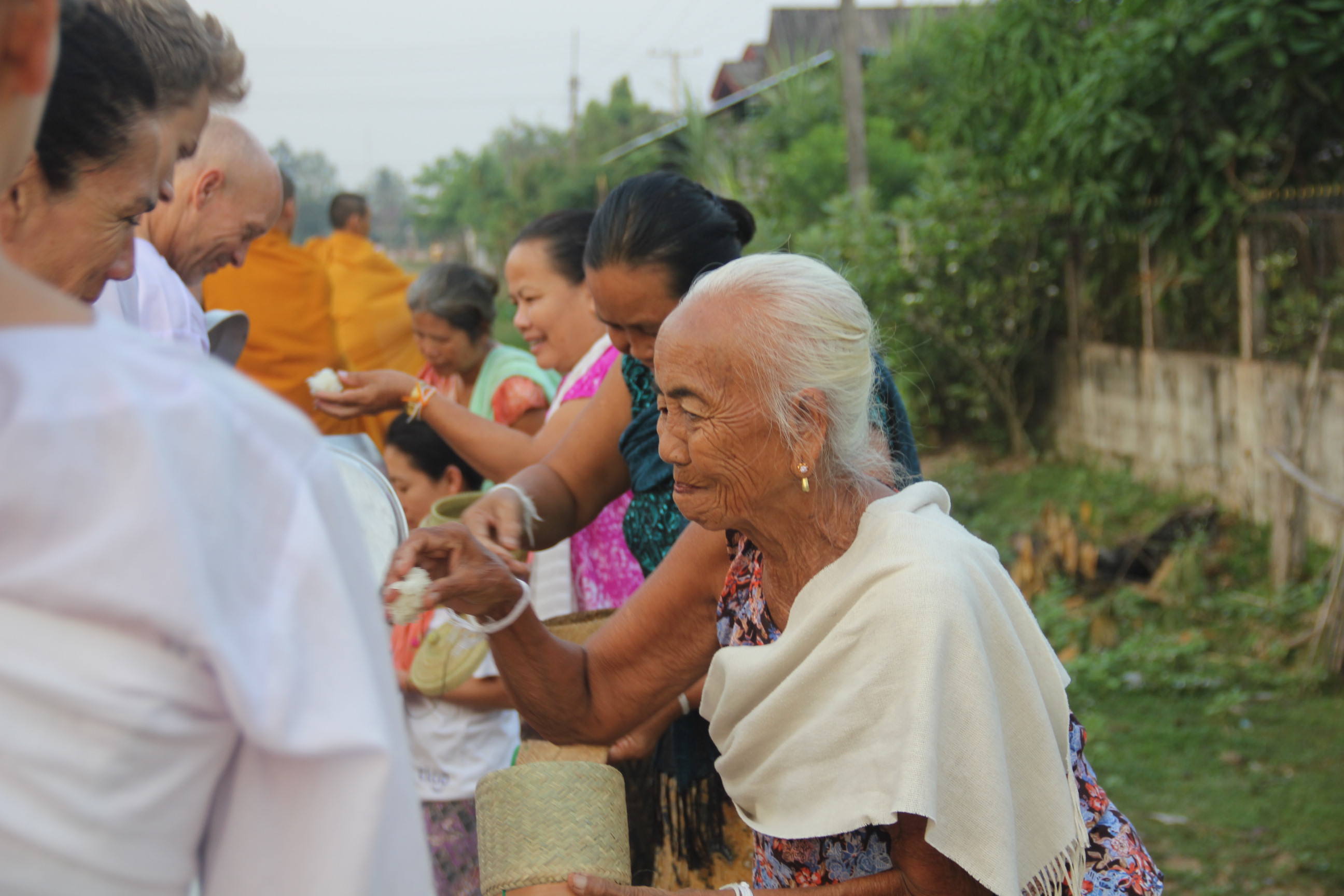
Experiencing the monk´s request for offers
Our meditation-instruction commenced at 0900 a.m. every day. The morning instruction lasted until 1030, when we stopped for lunch (with no more food after 1200 this meant that this early lunch was the last meal of the day). The afternoon meditation-instruction started at 1500 pm and lasted until just before the afternoon prayers (again in the form of chanting) at 1700 hours. The general rules of conduct also meant separe lodging for women and men and no mingling with anyone of the other sex after 1800.
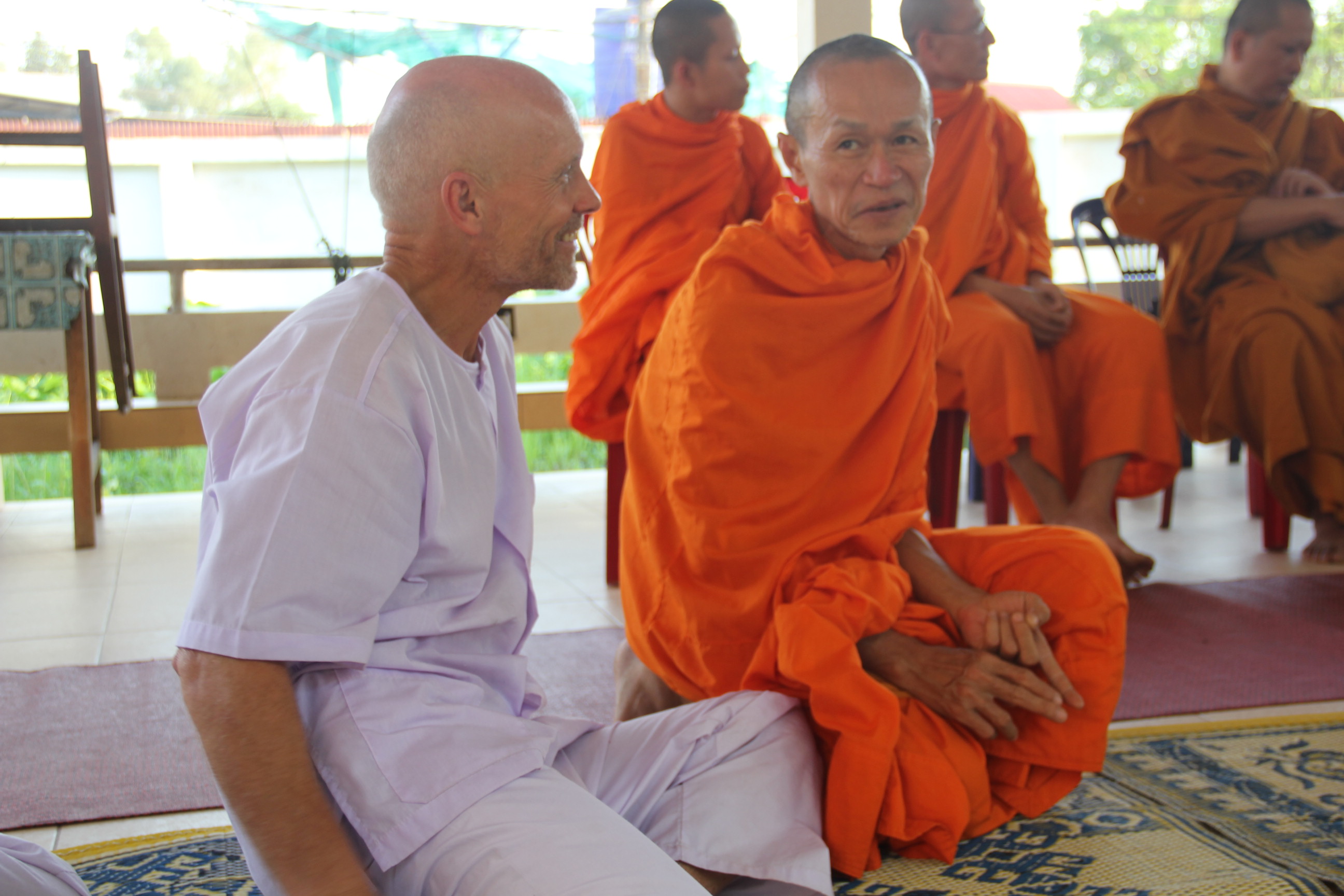
The meditation instruction was very, very good – the instructor, monk Khan Viseth spoke only Lao, but all instruction was translated by monk Phouvieng Chan Amphone with long experience both as an interpreter and in meditation-techniques. The instructor focused on the “how-to-do” of meditation, emphasing the basic techniques and knowledge enabling us to continue after leaving. We learned sitting, standing and walking meditation with a lot of emphasis on the importance of correct and calm breathing for calming the mind. We were told again and again the importance of controling the mind, obtaining a calm mind and literally to be cool at all times. However, this was not only theory – we personally experienced a coolness and calm in the entire pagoda and this in spite of hens, chickens, cocks, cats, dogs and pigeons all over the place. Buddists are prohibited to kill or harm animals and this certainly were evident – dogs and cats walked freely around during morning and afternoon prayers.
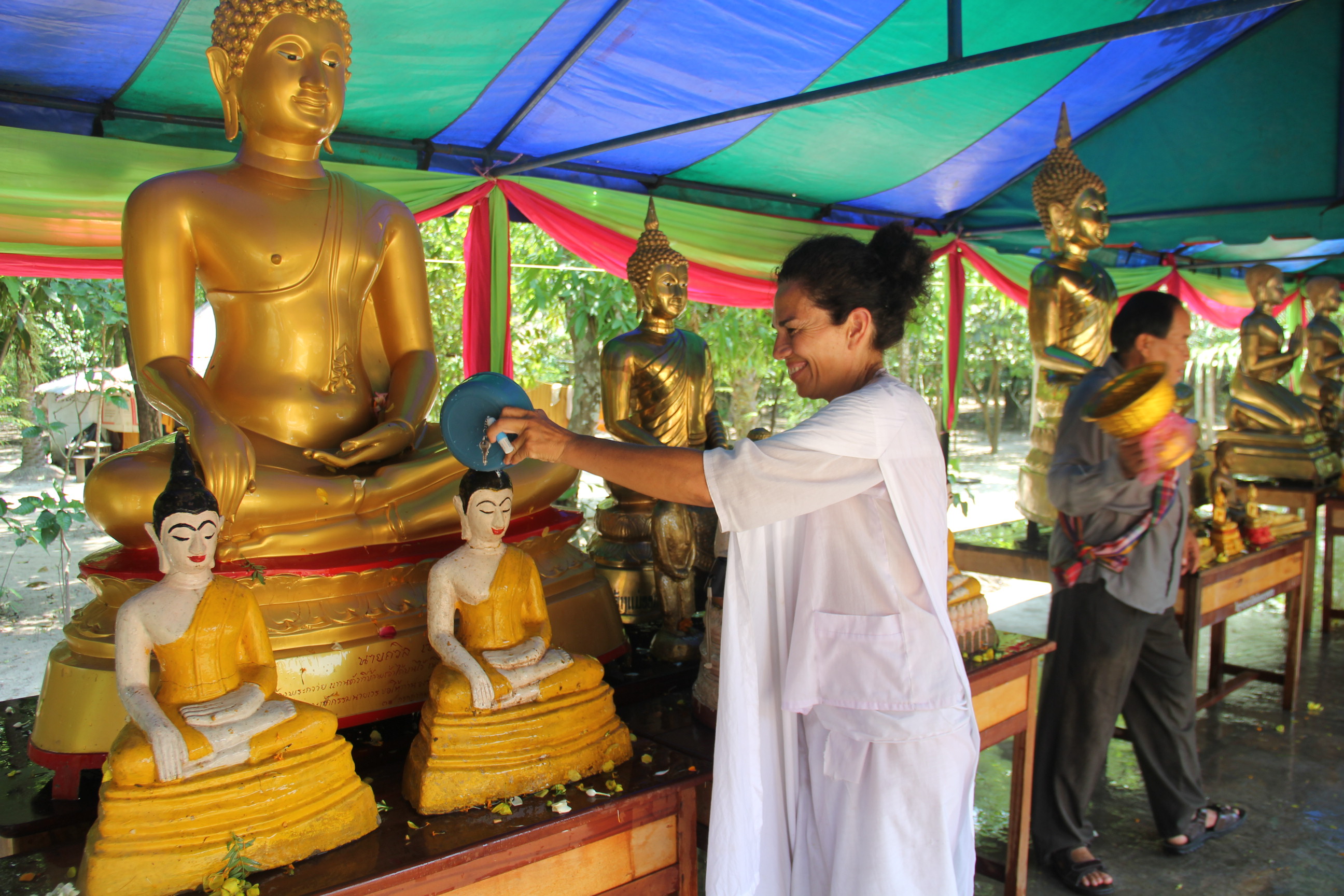
Participating in the New Years celebration
In my case the biggest problem was stiffness in legs and joints causing strong pain when trying to imitate the instructor´s (and everyone else´s) sitting positions. At some point, I felt the physical discomfort negatively influenced my ability to follow the instructor´s directions, but fortunately after 3 days of suffering, and I guess after having convinced the instructor´s of my will to learn and having tried very hard to force myself into a correct position, I was finally offered a soft peace of cloth to sit on. With a smile, he said he was aware how difficult the sitting could be for “westerners” – very nice touch indeed, I just wished he could have made it earlier… , because I was close to give up.
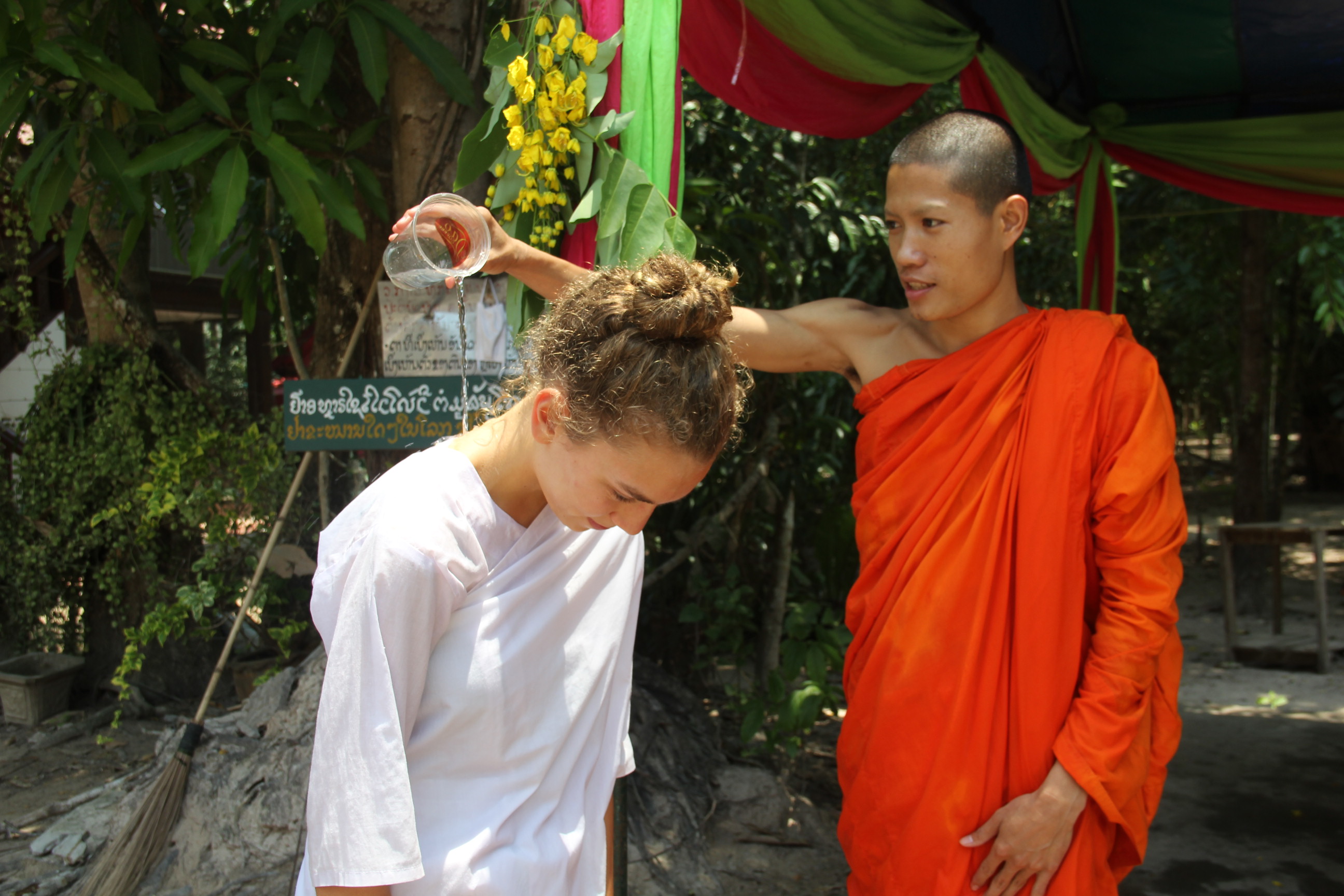
New Year´s Splash
During our stay, I shared a small cabin with Kristian in the garden of the pagoda – two beds, a big statue of Buddah and a small bathroom, lots of ants and shower by way of pouring water in a mug. After the afternoon prayers, we were usually invited to a cup of tea or coffee in the school as the translating monk loved to answer our questions and have a conversation about almost everything. This gave us a great opportunity to learn a lot about not only about Lao, but also South East Asia and oriental philosophy in general. Our translator, monk Phouvieng, a mining engineer by education, was well read and rich in both personal and professional experience. He told us he had been a monk several times in his life (most men serve as monk at least for a period) and that he most recently entered monkhood about 3 months ago. It was interesting to hear that monk´s may “de-monk” if so desired, while several young monks we met (among them monk Souly and his friends) told us that they became monks amongst other to get an education with the plan to later demonk to work as teachers.
During our visit, we took part in the new year celebrations (lots of water and cleaning of all Buddah statues) and on the forth day of our visit, we also participated in the celebration of the county´s 200 years anniversary. The people of the four villages prepared a big lunch and the monks and us were invited to participate. Of course everything was in Lao, but our translator stood by and translated and explained much of what was going on. A true cultural inmersion, including food, speaches and chanting.
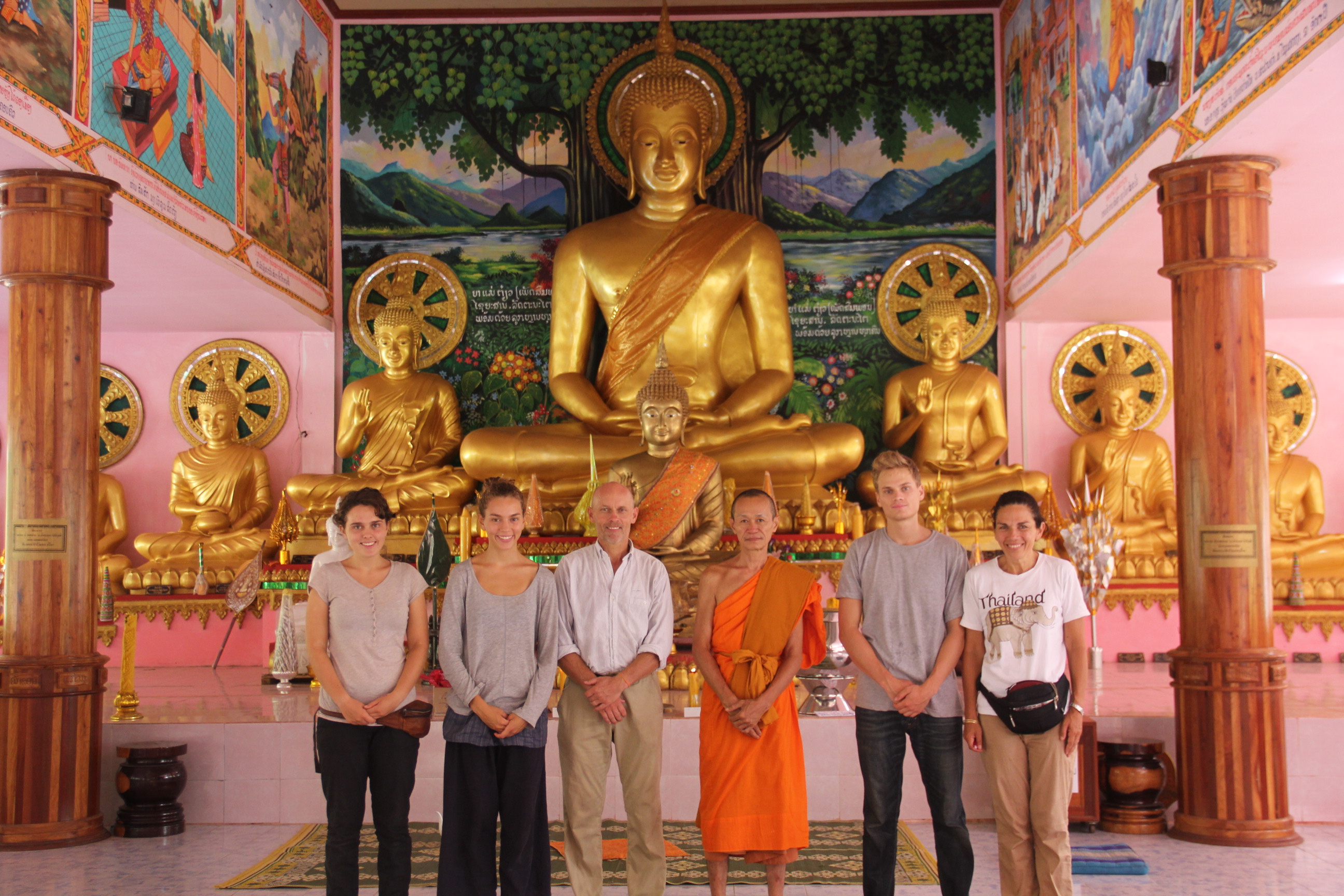
Saying good-bye
We finally said goodbye to the “Forest Temple” and Master Dr. Sali Kantasila offered me personal instruction in meditation on my next visit on the condition that I teach him to speak English. A great offer, which I would no doubt accepting if it was not for my still aching joints…
Oyvin










 elworldtrip
Marco
January 10, 2019
Hey Oyvin!
How are you?
thanks for the story! I would love to go there too. Is there any way of registering/applying to stay at the temple or do you just show up and request at the spot? Maybe you can answer me to schaetzelmarco@gmail.com.
Muchissimas gracias!!
Marco
Leonie
November 20, 2017
Hey there, I was looking for something like this in Laos and I was wondering how much you paid and if there is a direct way to contact them?
molly vallillo
April 26, 2016
Hello,
Do you have any ccontact information about this place? Id love to go but want to make sure it is a good time to visit.
Ade
December 16, 2015
Hola. Viajare a Laos en un par de semanas y estoy buscando un retiro como el que hicisteis vosotros. La verdad es que no encuentro mucha informacion a parte de vuestro blog y como solo voy a estar 2 semanas en Laos me gustaria poder hablar con alguien antes de llegar para comfirmar la posibilidad de hacer este retiro budista. Tendriais algun numero de telefono o email que me podais pasar para hablar con alguien que me pudiese decir si seria posible o no? Mi email es adelaida.aj@gmail.com. si pudieras darme alguna informacion os lo agradeceria enormemente.
Muchas gracias
agatakows
September 18, 2014
Hey! Realy nice blog! Can we ask which buddist pagoda were you visit on the beginning in vientiane?
Ankur Jalota
September 2, 2013
So my friend read your blog, and we decided to try going to this temple for a 2-day retreat. So we first tried to get an email or phone number rather than driving the 20km. At Wat So Pau Luang, we tried to get contact information for anyone at Na Khoun Noi, but no luck. There isnt any information about Na Khoun Noi online except your blog. So we decided to just go there in a tuk tuk and see if we would be admitted.
We spent 150k kip on a tuk tuk. When we got to Na Khoun Noi, we were definitely the only foreigners. Everyone pointed us to an elder monk who spoke English, and he was happy to see us. But he said we couldn’t stay, since they were having a big celebration for monks over the week, and there was a lot of preparation going on. At least we tried!
Marjory Rushforth
October 30, 2012
Aching joints can be relieved by the use of herbs and some topical painkillers like capsaicin. ”
My own webpage
http://www.healthmedicinelab.com/vitiligo-pictures/
Mitch Breitenberg
July 31, 2012
Aching joints are really quite painful sometimes. Some herbs are very useful to relieve the pain like oil of wintergreen. “”‘**
Till next time http://www.foodsupplementdigest.com“>
Teresa
May 14, 2012
Guau! qué interesante! Mona, esto tendrás que explicárnoslo con más detalle!! Un abrazo a todos
elworldtrip
May 15, 2012
Teresa, me encantará contároslo con todo detalle! Ha sido una de las mejores experiencia de todo el viaje hasta el momento. Ahora estamos en Laos de nuevo, para iniciar nuestro tour por China. Un abrazo muy fuerte, Martha.
Teresa
May 15, 2012
Gracias guapa! Enjoy China!!!
jaime ruiz ( iaio)
May 2, 2012
Oyvin:
No sabes como te envidio, pues creo firmemente que saber meditar y lograr paz interior nos llevará a la felicidad. Un abrazo,
Ligia